

Comparison of Key Specifications:
(1)Permeability:
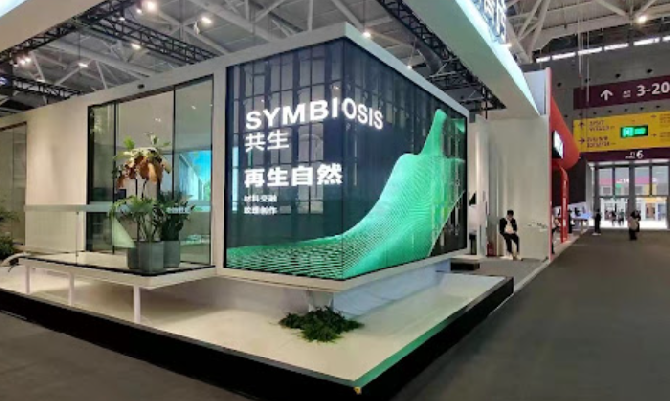
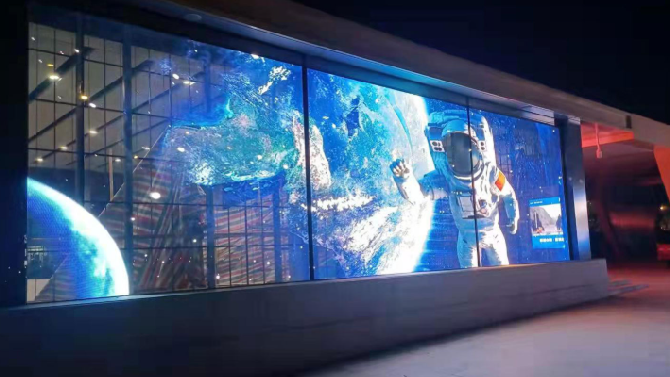
①Transparent screen: 65% to 95% transparency, appears nearly invisible when turned off, without obstructing natural light or the view.
②Traditional LED: 0% transparency, completely opaque, blocking the background and the view.
(2)Weight and thickness:
①Transparent screen: 3 to 12 kg/m², thickness of approximately 10 mm, minimalist structure.
②Traditional LED: 20 to 50 kg/m², the cabinets are heavy and require a high load bearing framework.
(3)Display effect:
①Transparent display: Images appear to float in 3D and blend seamlessly with the environment; however, the pixel pitch is relatively large and the resolution is low, resulting in a lack of fine detail when viewed up close.
②Traditional LED: High contrast, accurate color reproduction, and high resolution, offers distinct advantages for high definition viewing at close range.
(4)Installation and Maintenance:
①Transparent LED Display: Suitable for hanging, glass mounting, or curved installation without altering the building structure, individually removable strips for easy maintenance.
②Traditional LED: Requires a steel structural foundation and involves complex installation; features densely packed modules, making the repair of single-point failures difficult.
(5)Power Consumption and Thermal Dissipation:
①Transparent Screen: Open frame design ensures good heat dissipation and saves 20% to 30% on power; no additional cooling equipment required.
②Traditional LEDs: High power consumption and significant heat generation, require forced cooling an issue particularly pronounced in outdoor applications.
(6)Cost and Lifespan:
①Transparent screens: Unit price is 2 to 3 times that of traditional screens, high technical barriers, lifespan of approximately 5 to 8 years, relatively low outdoor stability.
②Traditional LEDs: mature technology, low price, lifespan of 8 to 10 years, good water and dust resistance, and durable for outdoor use.
(7)Applicable Scenarios:
①Top choices for transparent screens: glass curtain walls, shopping mall storefronts, sightseeing elevators, exhibition hall partitions, skylights or domes, and luxury store facades.
②Preferred applications for traditional LED: conference rooms or command centers, large outdoor screens, sports venues, stage backdrops, indoor high definition cinemas, and surveillance rooms.
 English
  简体中文
简体中文  Português do Brasil
  Italiano
  Español
  Français
  Deutsch
  한국어
한국어  日本語
日本語