

The contrast of waterproof iron & die cast aluminum cabinet:
(1)The advantages of waterproof iron cabinet:
①The lowest unit price and low manufacturing costs, and support customization to any non standard dimensions.
②It’s formed via sheet metal welding, the interior offers ample space, allowing for flexible cable routing and equipment installation.
③The cabinet features high self weight and excellent rigidity, ensuring stable wind resistance for the large screen floor standing column setup.
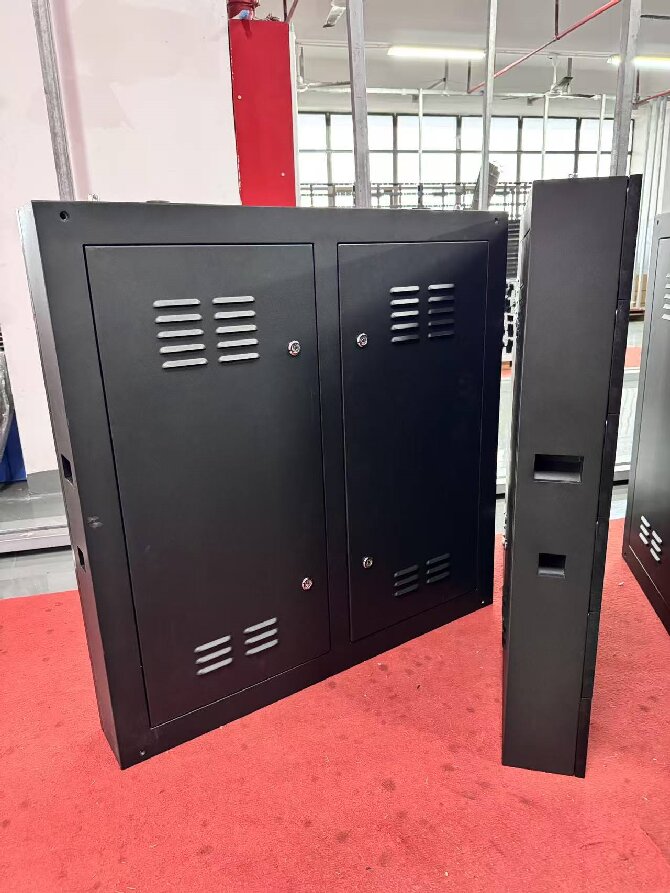
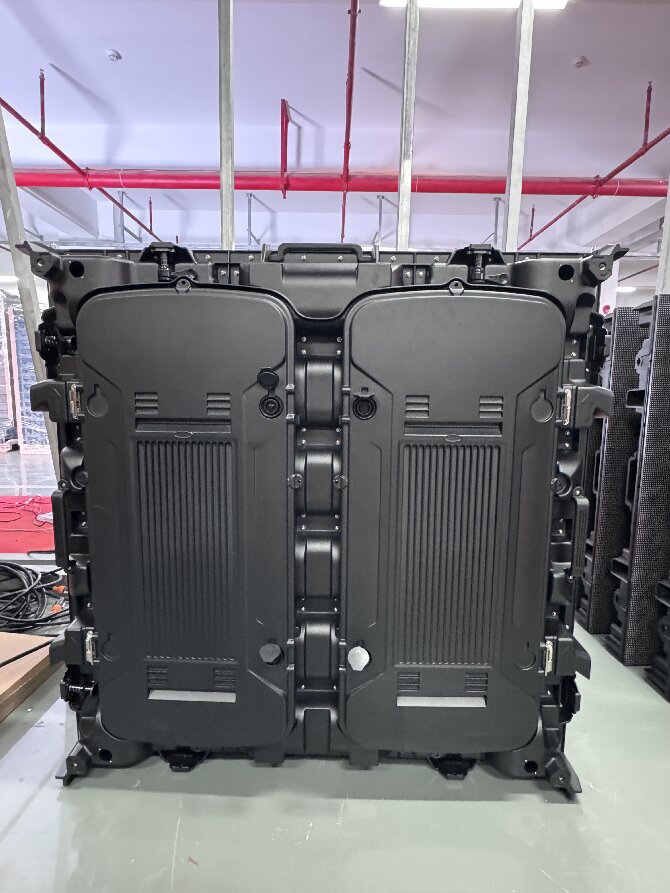
(2)The advantages of waterproof die cast aluminum cabinet:
①Compared to iron cabinet of the same specifications, it’s approximately 30% lighter, significantly reducing the load on steel structures and offering major advantages for wall mounting and overhead hoisting.
②Aluminum alloy offers excellent thermal conductivity, resulting in a lower temperature rise inside the cabinet under direct sunlight, thereby extending the lifespan of the modules and power supplies.
③Features an integrated, high precision design with uniform seams, resulting in superior screen flatness.
④Naturally rust resistant, it’s weather resistance in coastal, salt spray environments is far superior to that of iron cabinets.
⑤Standardized dimensions based on universal molds (640×480 / 640×640 / 960×960… )many models support front maintenance, making them the ideal choice for flush to wall installations where no rear clearance is available.
⑥Thinner casing, minimalist appearance.
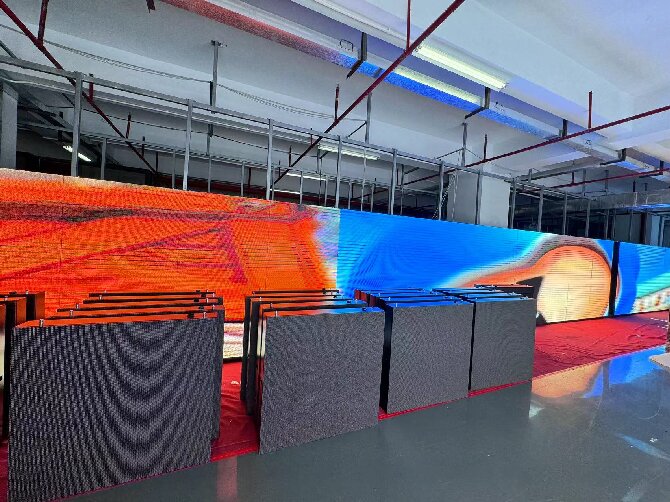
(3)Under what circumstances should an iron cabinet be chosen:
①Tight budget, large freestanding pillar mounted advertising screens, large format fixed outdoor screens with ample maintenance space at the rear.
②Non standard special dimensions and custom shaped cut cabinet are required.
③Arid inland regions, not located near the coast and free from prolonged exposure to high levels of salt spray.
④For floor standing installation of the screen, load bearing capacity is not a constraint, the priority is minimizing the initial hardware investment.
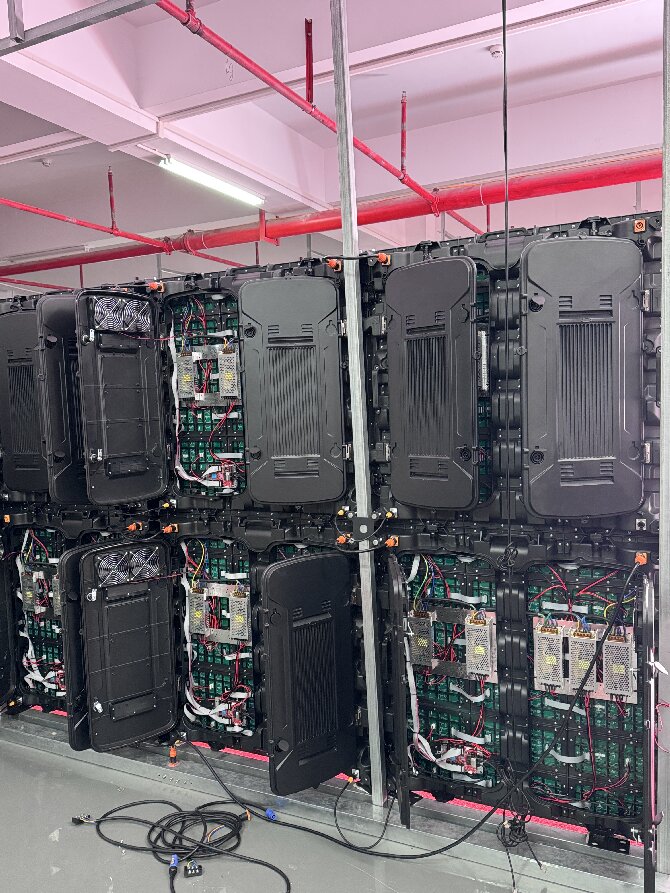
(4)Under what circumstances should an die cast aluminum cabinet be chosen:
①Wall mounted, high altitude hoisting, and building facade screens, with limited load bearing capacity of the steel structure.
②There is no service access at the rear, front maintenance is required.
③Coastal cities, riverside locations, high humidity areas, and salt spray environments.
④For future disassembly, reassembly, or modification, or in the event of at a temporary relocation.
⑤Aiming for long term stability and reduced maintenance costs associated with housing rust after 3 to 5 years.
 English
  简体中文
简体中文  Português do Brasil
  Italiano
  Español
  Français
  Deutsch
  한국어
한국어  日本語
日本語