

一. The difference between Hard Connection and Soft Connection:
①For soft connection:the modules and cabinets are connected via flat cables and power cables. The rear of each module typically features multiple ribbon cable interfaces, which must be manually connected one by one. Additionally, the interior of the cabinet houses various other cables, including power cables and signal cables.
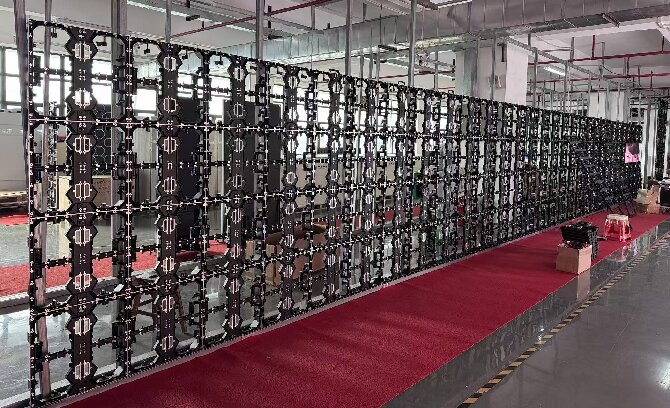
②For hard connection:the modules and cabinets connect directly via gold plated hard pin HUB boards or floating pin headers. There are no cables on the back of the modules, and the cabinet interiors are highly integrated, with virtually no visible loose wiring. Inter cabinet connections are automatically established through floating interfaces located on the sides of each cabinet.
二. The different between maintenance method:
①For hard connection:front maintenance was the primary focus. After removing a module using a suction tool, there are no connecting cables attached to the rear, allowing for direct and effortless removal. The power supply and receiving cards can also be inserted or extracted from the front or side, truly enabling single person, rapid response maintenance without the need to reserve any rear access space.
②For soft connection:traditionally, maintenance has been primarily rear access based. Due to the presence of cabling behind the unit, it typically requires opening the rear cover or detaching modules from the back. If the screen is mounted flush against a wall, the entire display must be pulled forward or partially dismantled during repairs a highly cumbersome process. Although some flexible connection systems now support front access maintenance, the modules remain tethered by ribbon cables even after removal, necessitating manual disconnection a procedure that remains tedious and complex.
三. The advantages of the hard connection rental screen:
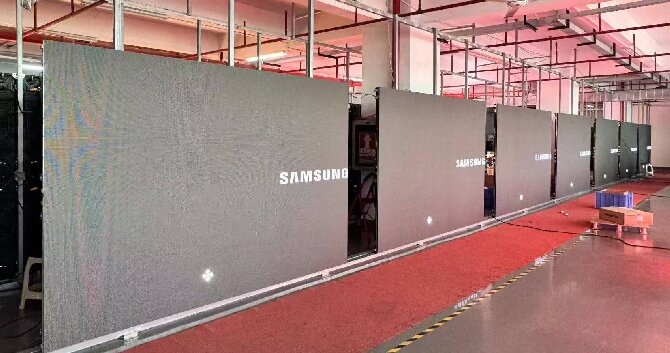
①Featuring a robust structure and exceptional seismic resistance, the hard connection design achieves a high degree of integration for components such as power supplies and receiving cards, ensuring fixed and secure interfaces. In contrast to soft connections which rely on ribbon cables this hard cable approach virtually eliminates the risk of loosening or poor contact during transport related vibrations or stage movements.
②Superior heat dissipation and enhanced protection many front maintenance, hard connection cabinets are constructed from die cast aluminum. Not only are these units lightweight and slim, but their solid, perforated back panels also provide excellent dust protection, effectively preventing dust intrusion that could compromise display performance.
③Support for Critical Backup:for mission critical scenarios such as live concerts where failure is not an option, many hard cable led displays feature dual redundancy for both power and signal. Even if a component fails, the backup system executes a seamless switchover, ensuring that the performance remains free of any screen blackouts.
④Signal transmission is more stable:compared to flexible ribbon cables, rigid connections such as gold fingers exhibit lower signal attenuation and superior resistance to interference. When combined with a high refresh rate, this ensures smooth, scan line free imagery, thereby meeting the demanding requirements of professional video image and live broadcasting.
⑤Boasting a sleek appearance and an ultra slim, lightweight profile, the display eliminates the clutter of cables typically found on the back, resulting in an overall look that is exceptionally clean. Furthermore, this integrated design allows the cabinet to be manufactured even thinner and lighter not only reducing shipping costs but also enhancing the aesthetic appeal of stage designs.
四. The hard connection rental screen applicable scenarios:
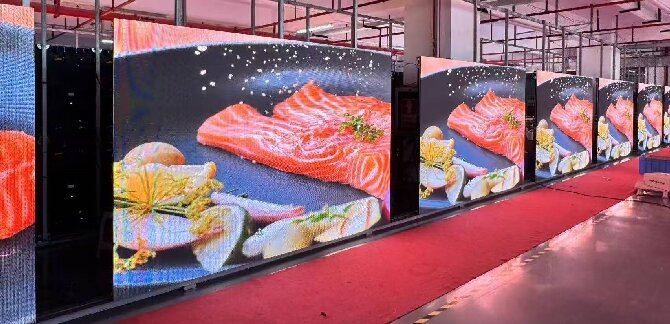
①Concerts, product launches, and music festivals characterized by their rapid setup and tear-down requirements demand that stage construction and dismantling be completed in the shortest possible time.
②Demanding shooting environments, such as TV studio sets and live broadcast events impose extremely rigorous requirements on refresh rates and image stability.
③In space constrained hotel banquet halls and shopping mall at riums, installations must be mounted directly against the wall, making it impossible to reserve maintenance access.
④The frequent long distance transport involved in touring places high demands on equipment’s shock resistance, we aim to minimize the risk of transit related damage.
 Português do Brasil
  English
  简体中文
简体中文  Italiano
  Español
  Français
  Deutsch
  Русский
  한국어
한국어  日本語
日本語