

There are many types of LED displays, with black LEDs and white LEDs being two widely used solutions. They each feature distinct properties and strengths to meet diverse application needs. For this reason, knowing the differences between black and white LEDs is essential for making the right choice and ensuring proper use of LED displays.

1. LED Display Black Lamp Beads: Pros and Cons
An LED display featuring “black lamp beads” refers to an LED display equipped with black bezels. This seemingly minor modification actually brings a host of practical advantages to the display—benefits that are too significant to overlook.
- A black bezel offers distinct advantages. It absorbs excess light, effectively reducing screen glare. This means that when watching videos or displaying content, the images on the screen appear sharper and brighter, while colors appear richer and more vibrant.
- LED displays featuring black lamp beads also demonstrate excellent energy-saving performance. Since the black casing facilitates superior heat dissipation, the display operates at a lower temperature, thereby reducing energy consumption. This not only helps save on electricity costs but also contributes to environmental protection.
- Due to its exceptional heat dissipation capabilities, the display’s temperature can be effectively regulated, thereby minimizing malfunctions and damage caused by high temperatures. This means that LED displays featuring black lamp beads possess a relatively long service life and provide users with a more stable and reliable display performance.
- However, due to the use of specialized packaging processes and materials, its manufacturing costs are relatively high—a factor that may deter users with limited budgets.
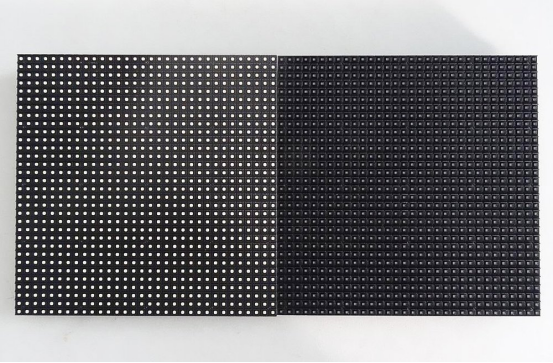
2. LED Display White Lamp Beads: Pros and Cons
White LED beads primarily consist of a white plastic bracket and a light-emitting chip.
- Moderate Brightness: The LED display featuring white lamp beads utilizes a white plastic bracket design, enabling the light-emitting chips to achieve a moderate level of brightness that meets the display requirements of general settings.
- Low Cost: The manufacturing cost of white LED display modules is relatively low, making them highly competitive in terms of price—a feature particularly well-suited for users with limited budgets.
- Wide Applicability: Given the extensive range of applications and mature technology associated with white-light LED displays, they enjoy high market recognition and acceptance, capable of meeting display requirements across a diverse array of settings.
- Compared to LED displays with black lamp beads, those with white lamp beads have lower contrast and, in certain situations, may not be able to provide sufficiently clear images.
3.Application
- High-End Applications:
The black mask of the black lamp acts as a “light reflection terminator,” effectively minimizing ambient light reflection and significantly enhancing image contrast. When displaying dark-themed content—such as a deep, starry night sky or a dense, lush forest—the Black Lamp precisely renders every minute detail, delivering a powerful visual impact. LED displays featuring Black Lamp beads are ideally suited for high-end settings, such as premium commercial advertising and large-scale event presentations.
- General Applications:
White lights, with their mature technology and cost advantages, are more suitable for general occasions, such as indoor displays and small events. While their visual effects and performance may not match those of displays utilizing black-LED beads, white-LED displays offer a relatively lower price point, making them a more suitable choice for users with limited budgets.
4.Conclusion
So, should you choose black-lamp or white-lamp displays? The answer depends entirely on your specific usage scenarios and requirements. If you are pursuing the ultimate display performance—and are willing to incur higher costs to achieve a premium visual experience—then black-lamp technology is undoubtedly your best choice. For applications such as stage performances and high-end commercial advertising, black-lamp displays will absolutely make your screen stand out from the crowd.
Conversely, if you prioritize cost-effectiveness and find that meeting basic display requirements is sufficient for your needs, then white-lamp technology is an excellent option. In areas such as indoor information dissemination and simple advertising playback, white-lamp displays allow you to save on expenses while still ensuring effective visual delivery.
 Français
  English
  简体中文
简体中文  Português do Brasil
  Italiano
  Español
  Deutsch
  Русский
  한국어
한국어  日本語
日本語