

一. Features and working principle of LED display screens:
①The core technology of led displays is self illumination and each pixel is a miniature led bead.
②Light emission principle is RGB led beads directly mix to emit light.
③The splicing effect is seamless, and it can be spliced in any size, and the physical seams are almost invisible.
④The contrast is extremely high, with the black portion of the led not emitting light; it is pure black and has extremely high brightness 1000 to 5000+ nits, making it suitable for strong outdoor lighting environments.
⑤Energy consumption is determined by the display screen. More black pixels result in lower power consumption and a longer lifespan up to 100,000 hours, but some individual led may fail.
⑥The screen size is flexible and can be spliced together to any size; it can be made into a flexible screen.
⑦Used for outdoor advertising, stage backdrops, command centers, and large shopping mall screens, it requires a high initial investment, but offers better value for money for larger sizes.
二. Features and working principle of LCD display screens:
①Lcd screens require back lighting, liquid crystal molecules twist to control the passage of light.
②The light emitting principle of an lcd screens is white back light + lcd shutter + color filter.
③Lcd have bezels or seams, and black borders appear when multiple screens are spliced together.
④Lcd screens have low contrast while black is light blocking, there is still light leakage, resulting in a grayish appearance and low brightness 200 to 1000+ nits, making them suitable for indoor use.
⑤Lcd screens have fixed sizes and limited splicing capabilities, they use hard glass and have a relatively short lifespan, and the back light module gradually degrades.
⑥Used in TVs, computer monitors, mobile phones, tablets, and indoor information screens, it offers low cost for small sizes, but the cost increases dramatically for ultra large sizes.
三. Advantages and disadvantages of LED displays:
This type of screen is the giant screen you see on the street or at concert venues, and it is essentially composed of countless tiny led beads arranged directly as pixels. Each pixel consists of three sub pixel beads: red, green, and blue. Various colors are displayed by controlling the brightness and mixing ratio of these beads.
1)Advantages of LED Screens:
①Seamless is its biggest advantage, although there are tiny gaps between individual modules, when assembled into a large screen, they are physically seamless, providing a complete viewing experience.
②High brightness is naturally bright and it remains clearly visible even in sunlight.
③High contrast when black is required, simply turn off the led in the corresponding area to achieve true black.
④Unlimited size in theory, screens of any size can be created by infinitely splicing modules.
⑤High reliability adaptable to harsh outdoor environments and has a long lifespan.
2)Disadvantages of LED Screens:
①Low pixel density due to the limitations of the physical size and spacing of the led beads, the image must be viewed from a certain distance; otherwise, noticeable graininess will be visible, and this is why there are parameters such as P1.2, P2, P3, and P10. The P value represents the distance between pixels, measured in millimeters. The smaller the P value, the higher the density and the clearer the image.
②High cost especially for small pitch led, the cost is very high.
③Power consumption and heat dissipation high brightness results in high power consumption, requiring a good heat dissipation design.

四. Advantages and disadvantages of LCD screens:
Lcd themselves do not emit light; they require a back light layer nowadays, led back lights are commonly used, which is why they are often confused with led back lights to provide a light source. The liquid crystal layer acts like a venetian blind, controlling the twisting of liquid crystal molecules via electric current to determine how much back light passes through, which is then used to produce color through color filters.
1)Advantages of LCD Screens:
①High pixel density the technology is mature and can be made very fine, making it suitable for devices that require close viewing, such as mobile phones and monitors.
②High cost effectiveness in the small and medium sized field, the cost is far lower than that of led direct display screens of the same size.
③Excellent color reproduction the technology is mature, and the color accuracy can be made very high.
2)Disadvantages of LCD Screens:
①There are seams when multiple lcd screens are spliced together to form a TV wall, the physical frame seam will disrupt the integrity of the picture.
②Limited brightness not suitable for use in bright light environments.
③Insufficient contrast the blacks are not pure, there is light leakage, and the contrast is not as good as oled and led direct display.
④Response time compared to led direct display, lcd has a slightly slower response time and may have ghosting although the technology is now very good.
五. What scenarios are LED displays used in?
①Requires ultra large and seamless display effects: such as command and control centers, large conference halls, and brand flagship store image walls.
②Applications include outdoor or extremely high brightness environments, such as outdoor billboards and large plaza screens.
③Zero tolerance for seams: such as in TV studios and stage backdrops, seams can negatively impact the program’s effect.
④With a sufficient budget and a pursuit of top notch visual impact.
六. What scenarios are LCD displays used in?
①Mainly used indoors under normal lighting conditions, such as home televisions, office computer monitors, and conference room presentation screens.
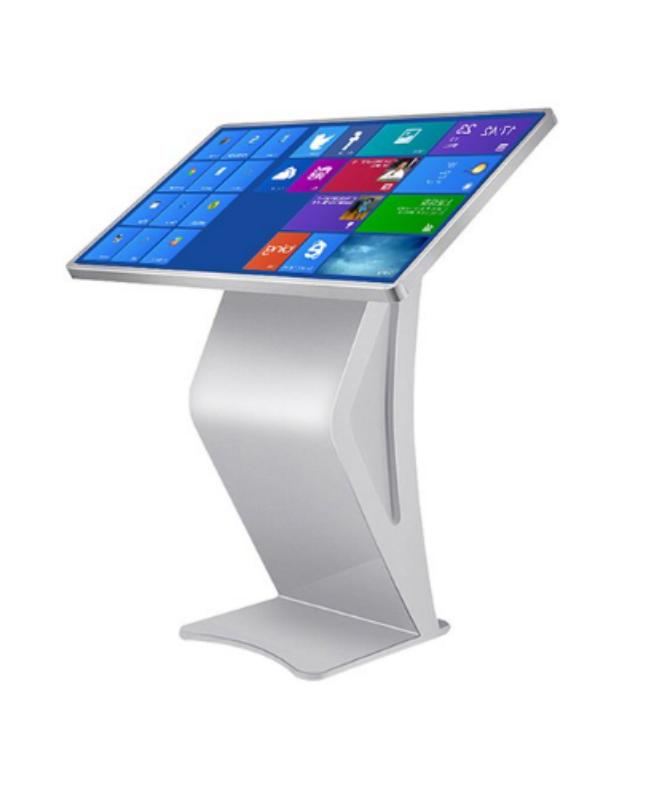
②For close up, high definition viewing, such as on mobile phones, tablets, and information kiosks.
③For those with a limited budget, or those seeking high cost performance in the small to medium size range.
④Using a single screen, or not being sensitive to black borders when splicing multiple screens.
 한국어
한국어  English
  简体中文
简体中文  Português do Brasil
  Italiano
  Español
  Français
  Deutsch
  Русский
  日本語
日本語