

Why are LED screens better than projectors?
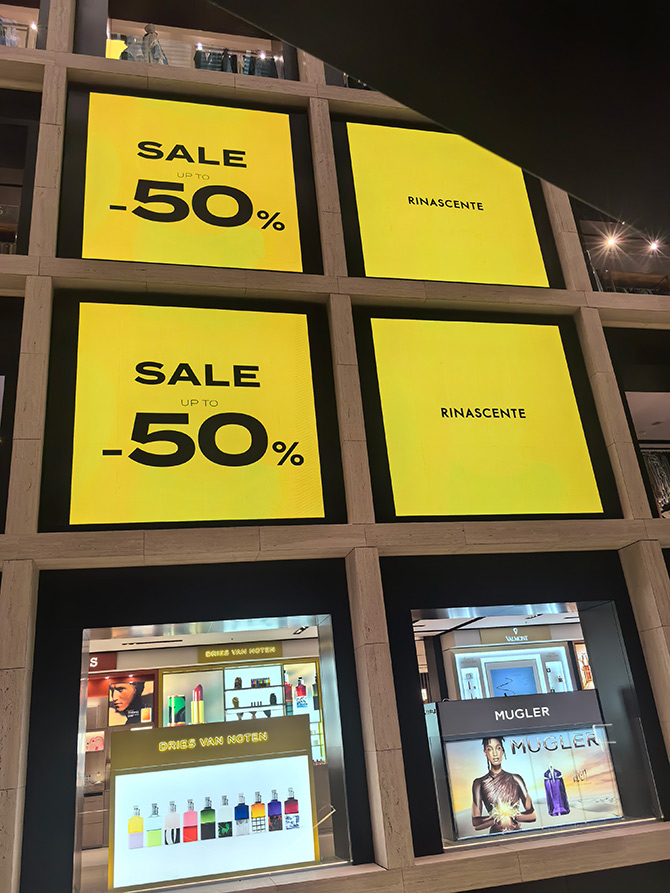
(1)Advantages of brightness and light resistance
——LED screen: Actively emits light, easily achieving brightness of over 1000 nits, or even several thousand nits.
The image remains vibrant and clear even in bright sunlight or under indoor lighting, eliminating the need to turn off lights or close curtains.
——Projector: Uses reflected light for imaging, resulting in limited brightness (typically a few hundred to a few thousand lumens).
Ambient light severely washes out the image, requiring a dark environment for clear viewing, greatly limiting its usage scenarios.
Conclusion: In brightly lit meeting rooms, shopping malls, exhibition halls, or outdoor daytime events, LED screens are the only option.
(2)Advantages of image quality and color
——LED screen: Pixels are self-illuminating, resulting in high color saturation and strong contrast (up to 10000:1 or more), with purer blacks. There is no image blurring at the edges due to light source degradation; the entire image is uniformly consistent.
——Projector: Color and contrast are affected by multiple factors including the lamp, screen, and ambient light. Brightness and clarity often decrease from the center to the edges of the image (keystone correction also degrades image quality), and colors tend to appear washed out.
Conclusion: For applications requiring accurate color reproduction (such as design review or product presentations) or those demanding visual impact, LED screens offer a clear advantage in image quality.
(3)Advantages of flexibility and a seamless experience
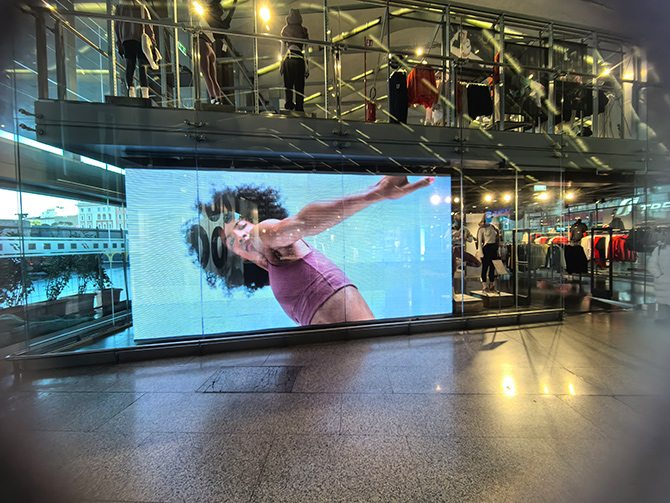
——LED screen: Can be flexibly assembled into any size and aspect ratio (such as ultra-long screens and irregularly shaped screens), and the units can be seamlessly spliced together, truly achieving the visual impact of a single, complete image.
——Projector: The size is limited by the projection ratio, and when multiple projectors are used for blending and splicing, there will be unavoidable physical gaps and overlapping brightness areas, disrupting the overall image integrity.
Conclusion: When creating immersive spaces, creative displays, or requiring extra-large seamless images, LED screens are the only viable technological solution.
(4) Advantages of reliability and maintenance
——LED screen: Long lifespan (up to 100,000 hours), high stability.
Adopts a modular design, allowing for quick and independent repair or replacement of individual components without affecting overall operation.
——Projector: Limited lamp life (a few thousand hours), requiring regular replacement, resulting in high consumable costs.
Light source brightness degrades significantly over time. Overall system repair is typically more complex and time-consuming.
Conclusion: For applications requiring 24/7 continuous operation or high-frequency use (such as command centers and advertising displays), LED screens offer lower long-term maintenance costs and greater reliability.
(5)Advantages of space and installation
——LED screen: The ultra-thin cabinet can be wall-mounted or embedded, taking up almost no indoor space. Projection distance is not a concern.
——Projector: Requires a longer projection distance and requires space for the projector unit and wiring in front of the screen, often disrupting the interior design or hindering movement.
Conclusion: In compact meeting rooms, high-end retail stores, or environments where minimalist design is desired, an LED screen is a better solution.
 Русский
  English
  简体中文
简体中文  Português do Brasil
  Italiano
  Español
  Français
  Deutsch
  한국어
한국어  日本語
日本語