

I. Basic Definition of the Two Solutions:
(1)Die cast aluminum:
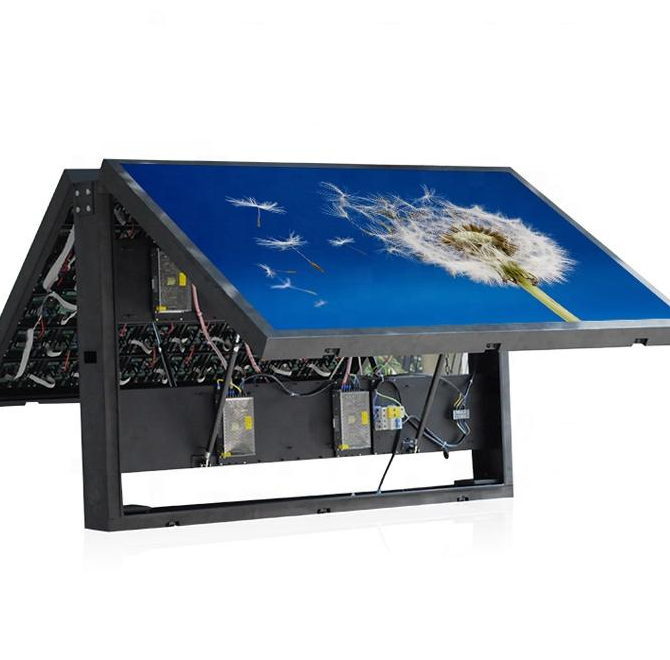
Standard cabinets made by integrated aluminum alloy die casting are the mainstream standardized solution for indoor high definition LED screens. They come in fixed sizes (commonly 640×480 and 640x640mm), pre-fitted with positioning pins, locking latches and quick connectors at the factory. Modules, power supplies and receiver cards are all pre-installed inside the cabinet, with flatness calibrated before delivery. This is a finished modular solution, widely adopted for fine pitch indoor high definition screens, rental screens and high end fixed installation projects.
(2)Steel structure solution (conventional steel frame/simple sheet metal cabinet):
The supporting frame is fabricated by welding square tubes and angle steel or through sheet metal processing. Modules are mounted directly onto the steel structure without integrated standard cabinets. For some projects, simple steel shell cabinets are adopted, which are not integrally die cast.
II.Comparison of Core Dimensions:
(1)Flatness and display quality:
①Die cast aluminum cabinet: Manufactured via integrated die casting, this cabinet offers high structural integrity with minimal deformation and superior precision. It utilizes positioning pins and locking mechanisms for assembly, ensuring uniform and controllable gaps between units. It is ideal for fine-pitch indoor LED displays, such as P2.5, P2, P1.8, and P1.5 models, where high precision in panel alignment is required to deliver detailed, seamless imagery, effectively preventing visual artifacts like mosaics or wavy patterns.
②Steel structures: These require on site welding and assembly, making the final quality highly dependent on the welder’s craftsmanship. Welding can easily lead to deformation and stress induced spring back, over time, this may result in localized bulges or depressions, as well as inconsistent seam widths. Such structures are not recommended for fine-pitch LED displays (P2 or smaller), they are better suited for larger pitch displays (P3, P4, and above), where there is a higher tolerance for surface unevenness.
(2)Installation, Commissioning, and Construction period:
①Die cast aluminum cabinets: Modules, power supplies, and cabling are pre installed at the factory. The standardized cabinet design means that on site work is limited to assembling the cabinets, securing the locking mechanisms, and connecting the main power or data lines. This ensures rapid installation, simple commissioning, and minimal need for rework. For standard indoor fixed displays, a 2 to 3 person team can achieve high installation efficiency, an ideal solution for projects with tight deadlines.
Both front and rear maintenance versions are well developed.
②Steel structures: Most processes are completed on site. This involves layout, welding, grinding, and painting, followed by the sequential installation of modules, electrical connections, and leveling. The leveling process is time consuming, as each module requires individual fine tuning, this results in higher labor costs and a longer construction period.
(3)Weight, Thickness, and Space Compatibility:
①Die cast aluminum: Aluminum alloy is lightweight and features a compact structure. Die cast aluminum cabinets designed for front maintenance are ultra thin and can be wall mounted an ideal solution for settings such as lobbies, conference rooms, exhibition halls, and elevator lobbies, where there is no access space behind the display and the wall has limited load bearing capacity.
②Steel structure: Due to the high density of steel, the overall weight is significant. It is much heavier than die cast aluminum for the same surface area, placing greater load bearing demands on the wall. Furthermore, the frame itself has a certain thickness, making an ultra thin, flush to wall installation difficult, additionally, space must be reserved behind the unit for maintenance access.
(4)Ongoing maintenance:
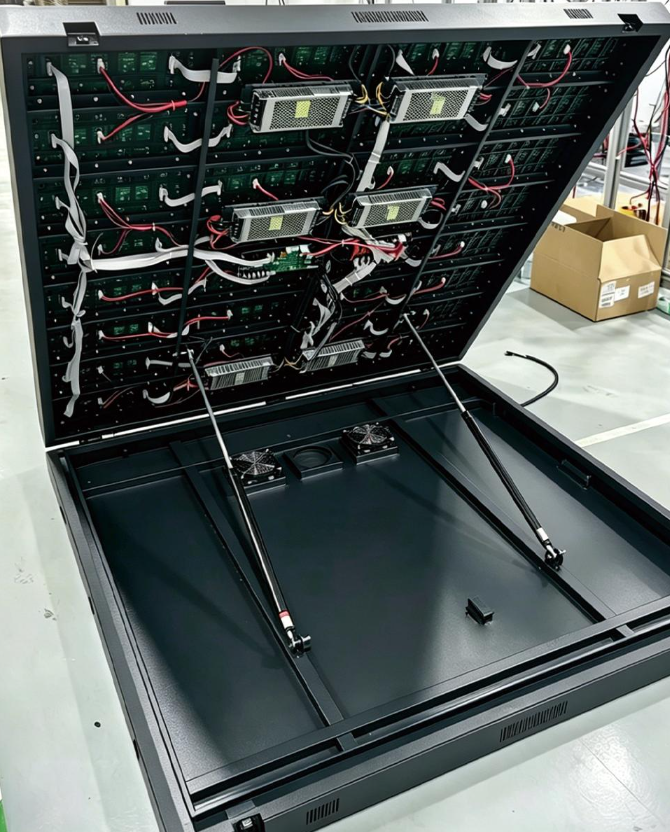
①Die cast aluminum cabinet: Modular design with individually detachable units. The power supply and receiving card are centralized on the rear of the cabinet, simplifying fault diagnosis. Front maintenance models allow for the removal of modules directly from the front, eliminating the need to access the rear of the display, which streamlines long term maintenance and makes these units ideal for projects where on site operational staff may lack specialized technical expertise.
②Steel structure: The modules are mounted individually onto a framework, with loose, exposed wiring and no unified enclosure for protection. This disorganized cabling is prone to wear and short circuits. Furthermore, should a module or power supply fail, the design, if configured for rear access requires personnel to go behind the display to perform repairs.
(5)Construction Cost:
①Die cast aluminum cabinet solution: Higher material costs and a premium on the cabinets themselves, however, this approach requires less on site labor and shorter installation timelines. While the overall project cost tends to be higher, the solution offers standardization, simplified quoting, and controllable waste or loss.
②Steel structure solution: The frame materials are inexpensive, resulting in low material costs, however, the process requires significant on site labor including welding and leveling leading to a high proportion of labor costs. Steel structures offer a better price performance ratio for larger projects or those with non standard dimensions. For smaller scale displays with standard dimensions, the overall cost difference compared to die cast aluminum solutions is minimal.
 Español
 English
 简体中文
 Português do Brasil
 Italiano
 Français
 Deutsch
 한국어
 日本語