
I. Die Kernfunktion des Sport-Perimeter-LED-Bildschirms:
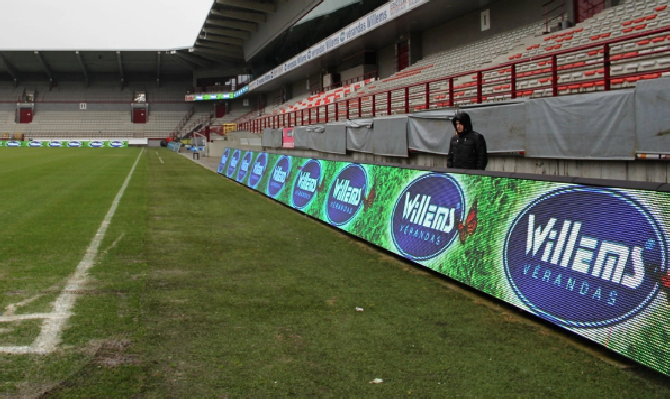
①Seine Hauptanwendung ist die Anzeige von Werbeplakaten; dies stellt die Kernfunktion des Sichtschutzzauns und seinen größten kommerziellen Wert dar.
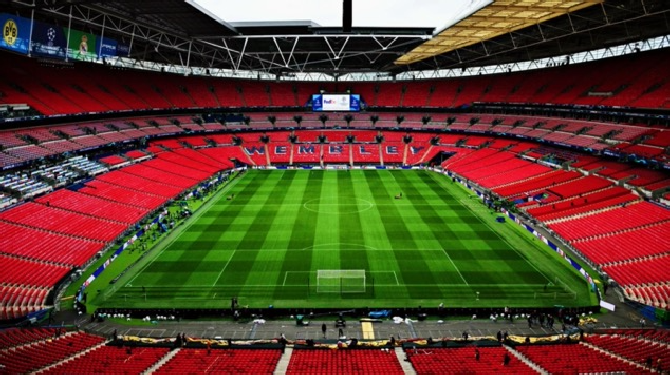
②Während des gesamten Spiels werden die sich ständig ändernden Werbegrafiken einem globalen Publikum über Fernsehübertragungen präsentiert und dienen als zentrale Plattform sowohl für die Veranstaltungsorganisation als auch für das Sponsorenmarketing.
③Bei bestimmten Konfigurationen kann die Highlight-Wiederholungsfunktion auch genutzt werden, um sofortige Wiederholungen spektakulärer Momente auf dem Spielfeld bereitzustellen und den Zuschauern vor Ort so ein verbessertes Seherlebnis zu bieten.
II. Die Besonderheiten des LED-Bildschirms am Sportrand:
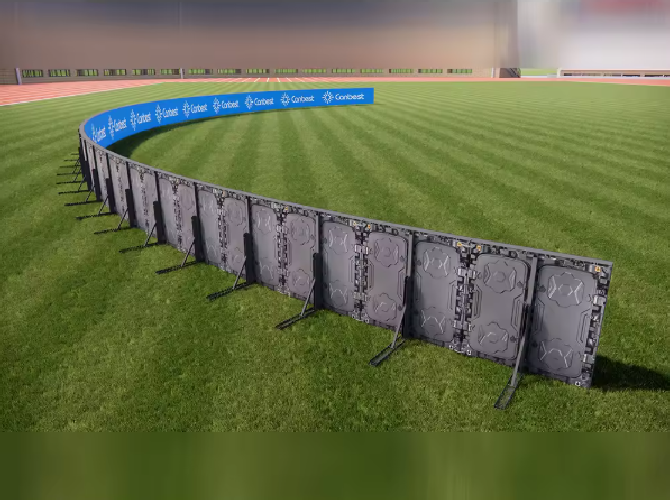
① Der vordere Anzeigebereich des Bildschirms muss mit einer Gummischicht oder einer speziellen weichen Schutzmaske abgedeckt sein. Dies dient als Puffer für den Fall, dass ein Sportler mit dem Bildschirm zusammenstößt, und verringert so das Verletzungsrisiko erheblich.
② Entlang der Oberkante des Bildschirms wurde außerdem ein dickes Schwammkissen angebracht, um zu verhindern, dass sich die Sportler bei einem Sturz den Kopf an den Ecken stoßen.
③Die Verbindungsschränke, aus denen die gesamte Leinwand besteht, wurden selbst speziell so konstruiert, dass sie eine gewisse Dämpfung und Kollisionsschutzfunktion bieten, anstatt starr befestigt zu sein.
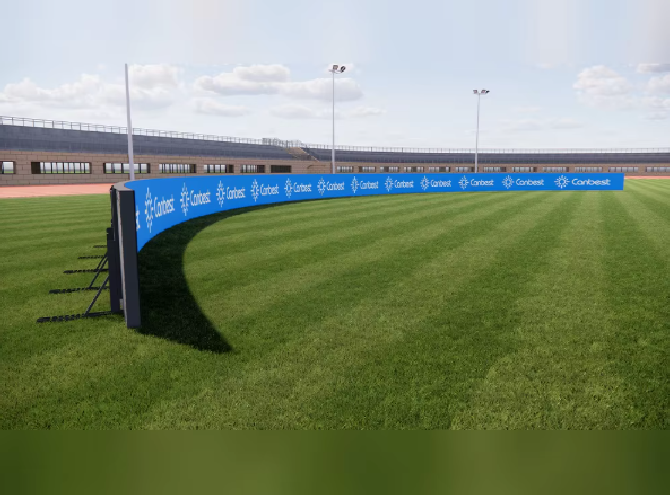
④Aus Sicherheitsgründen ist die Höhe von Sichtschutzzäunen in der Regel auf einen Meter begrenzt, sodass sie eher einer niedrigen Barriere als einer Mauer ähneln.
⑤Die Bildwiederholfrequenz des Perimeterdisplays muss maximal 10.000 Hz erreichen. Dadurch wird sichergestellt, dass der Bildschirm bei Zeitlupenwiederholungen in Fernsehsendungen keine Welleneffekte oder Flimmern aufweist.
⑥Mit einer Helligkeit von bis zu 6.000 Nits sorgt es dafür, dass das Bild auch bei starker Beleuchtung klar bleibt.
⑦Da das Gerät für den Außeneinsatz bestimmt ist, muss es eine Staub- und Wasserbeständigkeitsklasse von IP65 oder höher erfüllen, um der Einwirkung von Sonne und Regen standzuhalten.
⑧Das umlaufende Display besteht aus mehreren unabhängigen Schränken, die nahtlos über ineinandergreifende Schnallen miteinander verbunden sind; es unterstützt die Wartung von Vorder- und Rückseite von beiden Seiten und ermöglicht so eine schnelle Installation, Demontage und Reparatur während der Saison.
⑨Jeder Schrank verfügt über verstellbare Stützfüße an der Rückseite, wodurch der Neigungswinkel des Bildschirms je nach Veranstaltungsort und Winkel der Zuschauertribünen zwischen 65° und 90° eingestellt werden kann, um optimale Sichtverhältnisse zu gewährleisten.
⑩ In der Planungsphase ist es unerlässlich, Zugänge an bestimmten Stellen zu reservieren, um einen schnellen Zugang für Athleten und Mitarbeiter zu gewährleisten. Zudem kommt ein lüfterloses Kühlsystem zum Einsatz, um Störungen der Live-Audioübertragung während Wettkämpfen und Sendungen zu vermeiden.
III. Die Bedeutung von Stadionleinwänden:
Der große Bildschirm synchronisiert wichtige Daten wie Spielzeit, Mannschaftsstände, Foulanzahl und Auszeiten in Echtzeit und liefert so Athleten, Trainern, Schiedsrichtern und dem gesamten Publikum die genauesten Informationen.
Zeigt die Liste der aktiven Spieler, individuelle Statistiken wie Punkte, Rebounds und Assists, Informationen zu Auswechslungen und weitere Details an, sodass jeder leicht über die Situation auf dem Spielfeld informiert bleibt.
Um die Zuschauerbeteiligung zu fördern, werden auf der Großleinwand dynamische Animationen wie „Verteidigung!“ oder „Auf geht’s!“ angezeigt oder die Zuschauer zu interaktiven Aktionen wie der La-Ola-Welle oder zum Klatschen animiert. Dies steigert sowohl das Gefühl der Teilhabe als auch den Unterhaltungswert des Spiels erheblich.
Wenn die Heimmannschaft ein Tor erzielt oder den Sieg erringt, werden auf der riesigen Leinwand spektakuläre Jubelszenen und animierte Effekte gezeigt, die mit der Beleuchtungs- und Tonanlage vor Ort synchronisiert sind, um die Stadionatmosphäre auf einen fieberhaften Höhepunkt zu treiben.
 Deutsch
  English
  简体中文
简体中文  Português do Brasil
  Italiano
  Español
  Français
  한국어
한국어  日本語
日本語